
Emotional pain does “hurt”.
There is a difference between pain and suffering, and sometimes individuals create more suffering than the initial pain warrants. Emotional pain of rejection can hurt because it uses brain areas that are activated for affective distress of physical pain. The brain is designed to alert us to threats. It does this using unpleasant feelings like pain for physical and social threats. This makes sense evolutionarily because physical pain came first, so the emotional parallel developed to use the same brain circuits.
Physical pain is a biological signal that something is threatening our physical wellbeing. Physical pain is real. It triggers nerve pain circuits and physiological responses and behaviours. The withdrawal from something perceived to be dangerous, like boiling water, is an example of an objective behavioural response. Likewise, emotional pain is a signal that something, often social, is threatening our emotional (relationship) wellbeing. How one processes this immediate “feeling” after it occurs is where suffering comes in.
Withdrawal is a normal response to physical threats that cause pain. This is also a type of emotional response to emotional pain in social situations.
Emotional suffering is a subjective experience.
Individuals define suffering in different ways, but they include the subjective feeling of pain or discomfort. People suffer from colds, diseases, breakups, and hardships of all kinds. But suffering is different and separate from the original discomfort. It’s secondary to this original event, and it’s the result of how one perceives what happened. Muscle pain can result from an intense workout, and a person could feel good about that. A relationship breakup could be a relief that something very challenging is over. It doesn’t mean that there isn’t any discomfort or challenge. In these examples, the discomfort is real, but it differs from the suffering that might or might not follow.
A person forced to do physical labour for six hours a day for four years, would likely suffer. But an Olympic athlete who is excited about the challenge and the goal of winning a medal is less likely to experience suffering. The effort might be the same, but the difference is the story that influences how they perceive the situation.
Emotional pain happens. Then, stories are created.
Emotional pain is the experience of some perceived threat or damage to our emotional self. This includes our relationship self. Kross et al. (see below) have shown the impact of social rejection and the discomfort it causes. And, like physical pain, we want to understand it, because we want the pain to go away and prevent it from happening again.
This is where suffering can start. We create a story about the meaning of the source of the emotional pain. The story is subjective. This story can be based on a misunderstanding or misinformation. For example, suppose Chris insults Pat. Pat could make up a story about why this happened and create “meaning” about the event. For example, “Chris insulted me because he doesn’t like me anymore”. This can expand to, “will anyone ever like me? “ Now, these stories become the source of the suffering for Pat.
Don’t add insult to injury. Don’t add emotional suffering to emotional pain.
The insult above can’t create a true feeling of pain. Only the perception of what it means, that we give it, can. The sound waves from speaking can’t cause a pain sensation. But if the words get perceived as a rejection or threat, they can. Knoss et al. have shown that social rejection activates brain areas involved with physical pain.
Jan stubs a toe. Pain flares. Fear spikes, then fades. Jan ignores the event. No story exists. Pain occurs without suffering. Contrast this with a narrative. Jan blames the sidewalk. Jan curses clumsy feet.. Questions arise about fairness. This thinking creates the suffering. The story validates the pain.
Emotional pain happens. Emotional suffering doesn’t have to.
How much do we get our emotional toes stubbed but then make up a story about what it means and add suffering to the pain? Our experience or perception of emotional pain, while real, is subjective. Unlike physical pain, there are no sensation nerve receptors for emotional pain. In our earlier example, Pat could easily make up the story that Chris is rude and forget about the insult and experience no suffering. If Pat had made up a different story, she could have responded, “Ouch! That hurt. What’s going on with you?” Here, curiosity replaces suffering because of different perceptions about the event.
More differentiation, less emotional pain, less emotional suffering
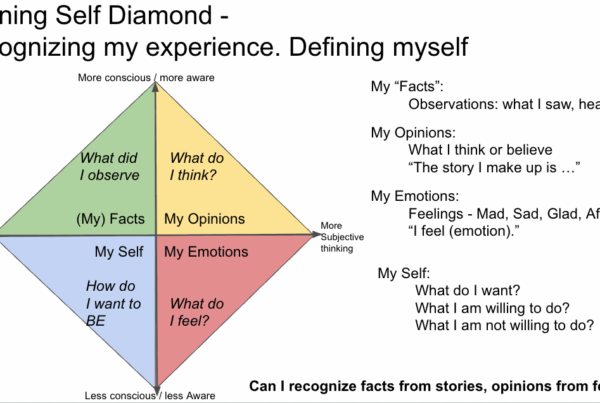
One aspect of being more differentiated is the ability to recognize and differentiate subjective thinking from objective thinking. Separating stories and opinions from facts. Objective thinking is experienced as reporting on what one observes. For example, “Chris moved their lips into an arc shape” would be the objective observation of a smile. So, Pat, a co-worker, subjectively interprets Chris’ facial expression as a “smile”. We experience subjective thinking as “stories” with judgements, interpretations, and assignments of fault. In this example, Pat’s story could be “Chris is laughing at my mistake. I’m such an idiot.” This is a story, an interpretation and a judgement. But is there any objective truth in this story? Pat and Chris would have to discuss in order to find out. But the more Pat can recognize their own subjective thinking versus objective observations, the less likely they are to add suffering to pain.
Consider someone who experiences chronic headaches but chooses to focus on living fully rather than creating stories about limitation or unfairness. The pain remains, but they reduce their suffering through how they think about it. I know someone who did exactly this. You wouldn’t have known they had headaches.
Fact versus fiction. Differentiation in the brain.
There are no perfect parents, partners, or children. There is no perfect family. Events happen. What stories do you make up, have you made up about your family? How objective are those stories? You might want to pick a significant event and compare your version with another family member. I’ve done this and was surprised at the difference. It was useful for me. Separating the facts of an event from the stories about the event is an aspect of differentiation. Differentiating facts from stories will change the meaning (feelings, judgements and interpretations) you assign to an event. This is one value of getting family history from multiple people. It can help to separate fact from fiction.
Some facts about an event will include the part you played in that event. A more differentiated person works to understand the part they played in any situation. They learn from that. So then they can recognize how to not have it happen again. This does not negate feelings of regret about the past or anxiousness about the future. However, they don’t need to suffer based on subjective stories involving interpretation, judgement, and blame.
Choose to reduce emotional suffering.
Events happen. We automatically create stories. When you notice yourself creating stories about emotional pain, why not try this exercise. Write the following using a three-column format. In the first column, list only what you observed, what actually happened that you could record on video. Next, in the second column, write the story you’re telling yourself about what it means. Last, record what other stories could fit these same facts. This practice trains your brain to distinguish between what happened and the meaning you’re adding. Reflect on how your emotions influenced the kind of stories you created.
The suffering comes from the stories that we make up. By separating facts from stories, you can challenge the story and reduce the suffering.
Working with a Bowen Theory counsellor
If you find yourself repeatedly creating stories that add suffering to emotional pain, or struggle to distinguish between facts and interpretations in your relationships, counselling can help. A Bowen Theory approach focuses on helping you observe your own patterns of thinking and responding, developing your ability to separate objective observations from subjective reactions.
To learn more about counselling services here. Or send us an inquiry here.
Thank you for your interest in thinking systems.
Dave Galloway
Knoss et al., Social rejection shares somatosensory representations with physical pain
For an excellent review of pain circuits, read: pain circuits
Read more about differentiation here.